Transcriptional stress, coupled repair and p53 activation
How does transcriptional blockage and stalled RNA polymerase link DNA damage sensing to p53 activation and cell fate decisions?
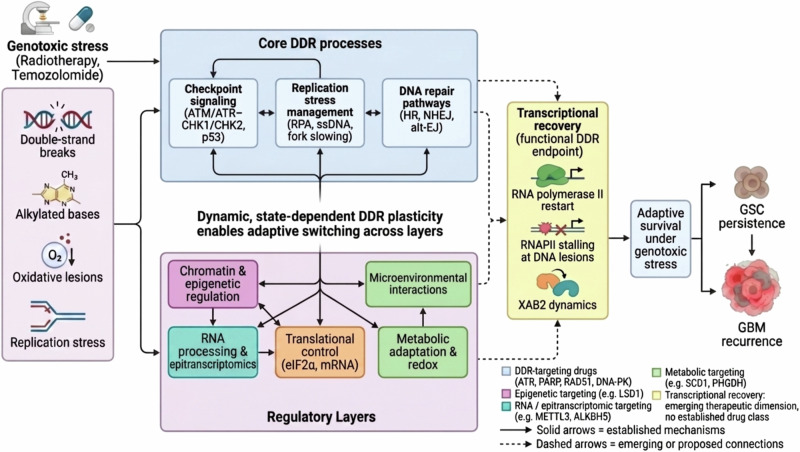
Transcriptional stress — for example caused by DNA lesions in active genes or by inhibition of elongation — produces discrete signalling events that recruit checkpoint factors and can rapidly stabilise/activate p53. We investigate the molecular intermediates (RPA, ATR and associated factors) that link stalled transcription complexes to canonical DNA damage checkpoint pathways and p53 modification, nuclear localisation and transcriptional responses.
By combining inducible locus-specific damage systems with genomic run-on assays, chromatin immunoprecipitation and proteomics, we map events from polymerase stalling to checkpoint kinase activation and the p53-dependent transcriptional programme that determines cell-cycle arrest, apoptosis or survival.